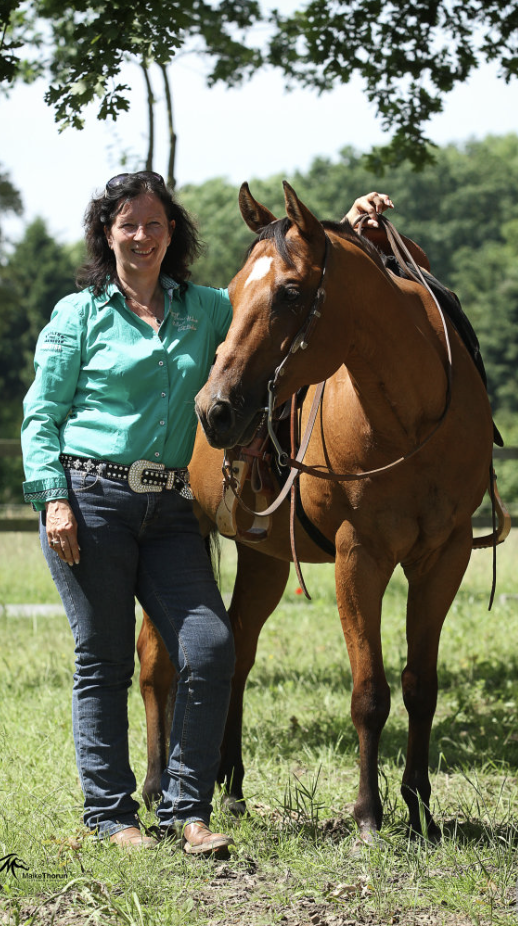
Dagmar Zenker
DZ“German western riding trainer and judge specializing in western performance horse development, rider education, and All Around training.”
Main Discipline
Western
The Philosophy
Dagmar Zenker is a German western riding trainer, coach, and judge specializing in the training and development of western performance horses and riders. With more than two decades of experience in western horsemanship, she is recognized for her horse-centered training philosophy emphasizing long-term soundness, rider education, and systematic development. Although she has retired from active full-time training, her educational concepts and influence continue through her former students and training resources.
Specializations
Western riding instruction
All Around horse training
Western performance horse development
Rider education and coaching
Competition preparation
Young horse development
Horsemanship and foundational training
Performance horse conditioning and management
Professional Background
Worked professionally as a western riding trainer for more than 20 years.
Developed and operated DZ Western Training, offering coaching, horse training, and rider education.
Trained riders with diverse goals, from recreational enthusiasts to competitive exhibitors.
Created a training system focused on balancing performance ambitions with horse welfare and longevity.
Has since retired from active mobile training but maintains her website as an educational resource and archive of her training philosophy.
Judging Credentials
Dagmar has been licensed as a judge for several major western horse organizations, including:
AQHA (American Quarter Horse Association)
APHA (American Paint Horse Association)
NRHA (National Reining Horse Association)
NSBA (National Snaffle Bit Association)
NCHA (National Cutting Horse Association)
Her judging experience enabled her to assist riders in preparing successfully for western competitions and understanding show standards.
Training Philosophy
Dagmar's philosophy centers on:
Prioritizing the horse's long-term health and usability.
Developing strength, balance, and coordination before increasing physical demands.
Educating riders as thoroughly as horses, believing that "a better rider makes a better horse."
Combining performance goals with ethical, welfare-focused training practices.